A THEMATIC OVERVIEW OF EDGEFIELD, SC
Edgefield County
Present-day Edgefield County was first settled in the 1750s, then a portion of a vast unsettled region of virgin forests, abundant wildlife and Indian tribes. From the time of the first settlements through the period of the American Revolution, this area was part of the Ninety Six District which included all of the northwestern portion of South Carolina. During most of this period there were no courts, law enforcement or local government.
In 1785, immediately following the Revolution, the state legislature addressed the lack of governmental structure by dividing the Ninety Six District into smaller counties, including Abbeville, Laurens, Newberry and Edgefield, South Carolina. Local courts, law enforcement agencies and governing bodies were established for each of these counties. At that time, Edgefield County was far larger than it is today, encompassing 1,720 square miles.
The seat of government for this broad district was located on an “Old Cherokee Path” which was the approximate geographical center of the district. The “Publick Lot” was identified as early as 1785, and a “gaol” (jail), clerk’s office and courthouse were built during the next several years. However, it was not until 1792 that Arthur Simkins, a prominent settler and political leader, officially conveyed to the “Judges of the Edgefield County Court” the 2¼ acres where the Town Square and Courthouse are now located.
In the last half of the 19th century and early in the 20th century, as citizens demanded more local political control, the counties of Aiken (1871), Saluda (1895), Greenwood (1897) and McCormick (1916) were created, taking substantial parts of Edgefield County. Today Edgefield County encompasses only 481 square miles, roughly one-fourth of its original size.
THE NAME “EDGEFIELD”
POLITICAL HERITAGE
A HISTORY OF VIOLENCE

AGRICULTURAL HISTORY
In the 18th century, Edgefield County had largely a subsistence economy in which the settlers consumed what they raised. Beginning around 1800, following the invention of the cotton gin, planters began to grow cotton, which became an extremely profitable cash crop. During the antebellum period, “King Cotton” created a plantation society based upon slave labor. The wealthiest planters erected imposing homes both on their plantations and in the Village of Edgefield.
After the War Between the States, cotton production continued to increase sharply until the early 1920s. Edgefield County, like most of the South, became a “one-crop” economy, in which all of life revolved around the cultivation of cotton.
In the early 1920s, the boll weevil arrived in Edgefield County, devastating cotton yields. This tiny insect triggered an extended decline in cotton production, causing a dramatic outmigration from the county’s farms and depressing the local economy for nearly half a century.
Although peaches have been grown in Edgefield County since the 18th century, the first commercial crop was produced by William Gregg in the 1840s With the decline of cotton in the 1930s, a number of farmers on “The Ridge” began to cultivate peaches on a commercial scale. By the late 1960s Edgefield County’s peach production had become nationally significant.
Forestry has always been an important part of the county’s economy. In the period after the decline of cotton, hundreds of thousands of acres in Edgefield County returned to woodlands, much of it for the commercial production of pine trees for the wood products and paper industries.
INDUSTRIAL HISTORY
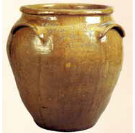
Beginning in 1809, Dr. Abner Landrum developed Edgefield’s first major industry, stoneware made from local clay. The most famous potter in Edgefield’s history was a literate black slave named “Dave” whose pots, occasionally being inscribed with poems, are highly prized by collectors and museums today.
In the 1820s, Henry Schultz, a native of Hamburg, Germany, built the market town of Hamburg on the Savannah River across from Augusta. A decade later the world’s longest railroad was constructed, linking Hamburg to Charleston. Unfortunately, further railroad extensions in Edgefield County were delayed for many decades, with the railroad not reaching the Town of Edgefield until 1888.
The first textile manufacturing operation in the Edgefield District was started by another enterprising German immigrant, Christian Breithaupt, who built a mill in 1828 on Horse Creek at Vaucluse. In 1845 William Gregg chartered the Graniteville Company, which became the most productive textile mill in the antebellum South.
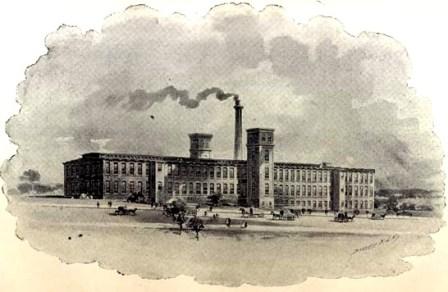
Daniel Augustus Tompkins, a remarkable engineer, businessman and industrial prophet, was an Edgefield son who had a great impact on the industrialization of the entire South. He was the father of the cottonseed oil industry and also designed and built over 200 textile mills throughout the South, including the 1896 Edgefield mill.
In the decades following World War II, a number of national companies built manufacturing plants in the county. By the turn of the millennium, Edgefield County’s economy was broadly diversified, with the agricultural, manufacturing and service sectors each providing approximately equal measures of economic activity. Since 2000 There has been a significant decline in manufacturing employment in Edgefield County.
RELIGION & EDUCATION
Religion has played an important part in the lives of the people of Edgefield County. In the 1760s, the great Separatist Baptist evangelist, Daniel Marshall, came to this area and established Big Stevens Creek and Horn’s Creek Churches. In 1826 Edgefield Baptists, together with others from around the state, established Furman Academy and Theological Institution, the forerunner of Furman University and the Southern Baptist Theological Seminary. The Edgefield church later came under the leadership of the Rev. William Bullein Johnson, who became the founder and first president of the Southern Baptist Convention. Other denominations, including Methodists, Episcopalians and Catholics, were established here in the antebellum period.
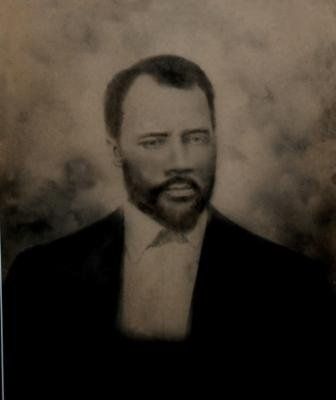
After the War Between the States, a remarkable former slave, Rev. Alexander Bettis, provided inspiring leadership for the freedmen and established over forty churches throughout Edgefield and Aiken Counties. These churches were organized into the Mount Canaan Association and, with their combined resources, Bettis Academy, a school for the African-American youth of the region, was established in 1881. Another prominent African-American educator from Edgefield County was Dr. Benjamin Mays, the president of Morehouse College in Atlanta and a mentor of the Rev. Martin Luther King, Jr.
From early in the 19th century and throughout the antebellum period, Edgefield County was noted for its superior schools, including the Edgefield Village Academy, the Blocker Academy, the Edgefield Female Academy and the Curryton Academy. Later, from 1898 to 1913, the South Carolina Co-Educational Institute, located in the Town of Edgefield, was recognized throughout the Southeast for its academic excellence.
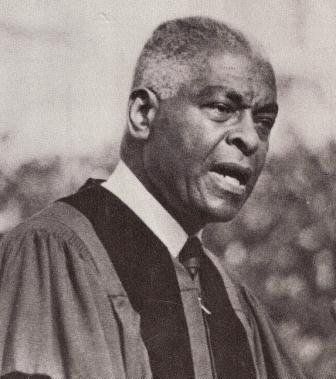
Benjamin E. Mays
EDGEFIELD POTTERY
Beginning in 1809 when Dr. Abner Landrum (1785-1859) discovered a “chalk” in the Edgefield District which he deemed to be suitable for making pottery, the manufacturing of “Edgefield pottery” became one of the principal industries in the district until the 1870s. After touring northern potteries, possibly studying Chinese pottery-making techniques or simply as a result of his inventive genius, Dr. Landrum developed the process of manufacturing stoneware by coating it with an alkaline glaze composed of feldspar, lime and wood ash, and by firing it at very high temperatures until the vessels became impervious. The resulting pottery was a utilitarian product, used primarily for the storage of food and liquids on the plantations and in the villages. Because it was durable, inexpensive and non-toxic, Edgefield pottery became highly sought after by the burgeoning population of the early 19th century South and was delivered throughout the Southeast by wagons and later by rail.
Various members of the Landrum, Drake and Miles families, as well as other entrepreneurs, including Thomas Chandler and Collin Rhodes, joined Dr. Landrum in producing the pottery at a number of locations throughout the Edgefield District. As the potters competed to make their products more marketable, they began to decorate them by applying to the surface of the vessels designs from contrasting clays before firing.
Slaves were the primary workers in the potteries, the best known of whom was Dave Drake (1801-1870s). Dave’s contribution as a master potter was unusual and unique because he was literate and on many of his pots, he signed his name “Dave” with the date of manufacture and occasionally a simple poem. Dave and his ceramics have achieved iconic
status today. His stoneware is prominently exhibited in our nation’s finest museums. Beginning in the late 1850s, other African American potters began making “face jugs” which appeared to harken back to their African origins. Today, surviving pieces of Edgefield pottery are avidly sought after by collectors.

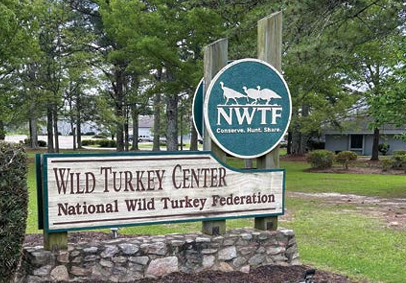
NATIONAL WILD TURKEY FEDERATION
This wildlife conservation organization was founded in Fredericksburg, Virginia in 1973 by Tom Rodgers, a lifelong turkey hunter, but the very next year, after appreciating the wonderful turkey hunting experience he had enjoyed here, Rodgers moved the organization to Edgefield where its headquarters has remained for nearly half a century. The first location of the NWTF was in the Thurmond Law Building on Buncombe Street. By the early1980s the organization had grown to such an extent that it needed an even larger space. On land given to the Federation on Augusta Road two miles south of the Court House, groundbreaking for The Wild Turkey Center was held in 1980.
Rob Keck joined the Federation as director of Chapter Development in 1978 and was promoted to executive vice president in 1981. Under the leadership of Keck and NWTF chief operating officer, Carl Brown, the NWTF continued to grow, holding its first fundraising banquet in 1983. Using the revenue from its membership and banquet program, the NWTF began to make significant contributions to rebuilding the wild turkey population throughout the country by its Wild Turkey Super Fund program (1985), by its partnership with the United States Forest Service (1986), and by launching its Target 2000, a national wild turkey restocking plan (1987). The NWTF has since captured and relocated hundreds of thousands of wild turkeys and has conserved over four million acres of wildlife habitat, making it one of the most successful conservation organizations in the nation. In 2016 its Palmetto Shooting Complex was opened.
As it celebrates its 50 years of effort to preserve the Wild Turkey, the National Wild Turkey Federation remains an important part of Edgefield’s life and history.
OUR CONFEDERATE HERITAGE
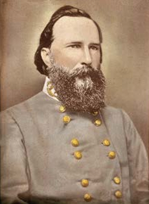
In the last decade, one group of Americans from our past who have become widely condemned are our Confederate soldiers. Confederate memorials have been removed from countless sites across the country and many streets, buildings and military installations have been renamed to remove any mention of Confederate soldiers or officers. Those promoting these actions argue that Confederates were “traitors” because they fought against the United States and that they fought only “to preserve slavery.” Confederates were not traitors, but their loyalty was to their states which had the Constitutional right to secede from the country, rather than to the United States. They were no more traitors than George Washington and other Revolutionary leaders were traitors to King George III.
The unrelenting attacks on the institution of slavery and its prohibition in the territories was the principal reason why the South wanted to leave the Union. The South’s economy – for better or worse – was almost entirely based upon slavery. Any thinking person would have found it exceedingly difficult to envision how slavery could be brought to an end without rending apart the entire economic and social fabric of the South. Given the same background and faced with the same circumstances, the overwhelming majority of us would have acted just as those Confederates did. They believed that their fight was a just one: they were fighting to preserve their homes, their communities, their states and their way of life.
Almost all fighting age white men in Edgefield County served in the Confederate army. They endured four of the bloodiest years of war in human history in which nearly one-third became casualties. But, despite it all, they fought valiantly and well. It is therefore not surprising that, in the aftermath of the War, the people of Edgefield and throughout the South would seek to honor those who fought and died for the Confederate cause. The rest of the nation joined with the South in honoring the Confederate leaders with statues, names of counties, cities, streets, buildings and military bases all over the nation being named for Confederate heroes.
Today’s misguided critics who seek to destroy these memorials to Confederates are totally unjustified in their actions because they fail to acknowledge the historical context in which these men lived and fought. Otherwise good and intelligent politicians, who know better, have been cowed into silence over this issue and are failing to stand up for this whole generation of our ancestors. As for us, the Edgefield County Historical Society proudly salutes our Confederate soldiers and their leaders, just as we do all of those – white and black – who have been a part of molding our County over more than three centuries. We will continue to remember and honor our Confederates and all other past Edgefieldians in the decades and centuries to come.
PEACHES
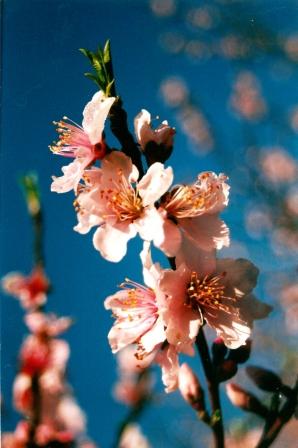
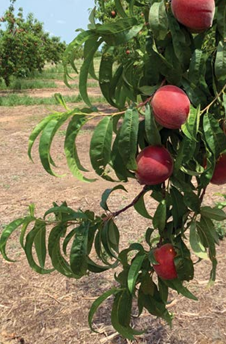
Today, many visitors to Edgefield County think of the county for the peaches which grow here and are available from the “peach stands” which are very popular destinations from May through September of each year. In March and April, visitors to the county are also overwhelmed by the beauty of the peach orchards when they are in full bloom.
Indeed, peaches have been a major part of our county’s economy since the first settlement here in the 18th century. In 1766, General Andrew Williamson’s orchard in the South Carolina backcountry produced 3,000 bushels of peaches! Occasional old plats from the colonial era have “peach orchard” marked on them. Accounts of Revolutionary soldiers indicate that peaches were a major staple for their diets.
The first truly commercial peach production in the Edgefield District was undertaken by William Gregg, the founder of the Graniteville Company. In the 1840s he had an orchard near his home on Kalmia Hill from which he shipped peaches by rail to Charleston and then by steamer to New York. After the Civil War in 1872, Colonel R. B. Watson of Ridge Spring was also shipping peaches to the northern markets.
In the 1930’s, as the boll weevil began to decimate the cotton crop in Edgefield County, enterprising farmers from the Ridge section, including G. C. and L. D. Holmes, Frank Miller and Burrell Boatwright, began to switch from cotton to peaches and became significant producers of this fruit.
The “Ridge” on the eastern side of Edgefield County extends into Saluda, Aiken and Lexington Counties and is ideal for growing peaches. This ridge, between the headwaters of the Edisto River and the various tributaries of the Saluda and Savannah Rivers, is characterized by high elevations and good soil types for peach production. It is the high elevations of this area that protect the fruit from the spring frosts in March and April which tend to settle into the lower elevations, leaving the peach trees on the Ridge undamaged.
Today (2023), there are approximately 15,000 acres of peach orchards on the Ridge, most of which are in Edgefield County. These peach orchards account for approximately $85 million in revenue and approximately 85% of the total value of peach production in South Carolina. By itself, Edgefield County produces more peaches than the entire state of Georgia. It is second only to California in total peach production.
CAMELLIAS
For more than a century and a half, camellias have grown in Edgefield gardens. A number of Edgefieldians have been passionate camellia growers, including Edwin Folk, Joe and Chrissie Holland, Rainsford Cantelou, Douglas Wise, and most recently Henrietta O'Dell Humphreys. The Edgefield Camellia Club annually hosts the "Camellia Tea" at Magnolia Dale in mid-February when the camellias are in full bloom. It is an elegant event to which the public is invited! Ladies should wear their hats!